Land Title Search & Property Documents
Order titles, plans, instruments and ASIC searches for any property in Australia — straight from the map, delivered to your inbox in minutes. One account, every state registry, no chasing.

"As a property advisory business covering multiple market sectors nationally, efficient and user-friendly access to reliable property data is essential. Landchecker’s breadth of coverage and suite of consolidated tools provide our various teams with data, information and high-resolution imagery that contribute toward streamlining our processes and enhancing productivity."
Nick Ashton, Managing Director
Charter Keck Cramer
Titles
What is a title and why do you need one?
A land title is the official and legal document that outlines the property’s ownership, as well as any associated instruments, dealings and owners corporation. Because it includes interests and restrictions on the land, it is the most essential document for property stakeholders.
What is a title useful for?
Here are some examples of how a title might be used:
- Home Buyers, Investors and Real Estate Agents for researching prospective properties
- Legal Practitioners and Valuers for checking current property ownership
- Developers and Builders for due diligence before actioning project
- Town Planners and Architects for planning applications
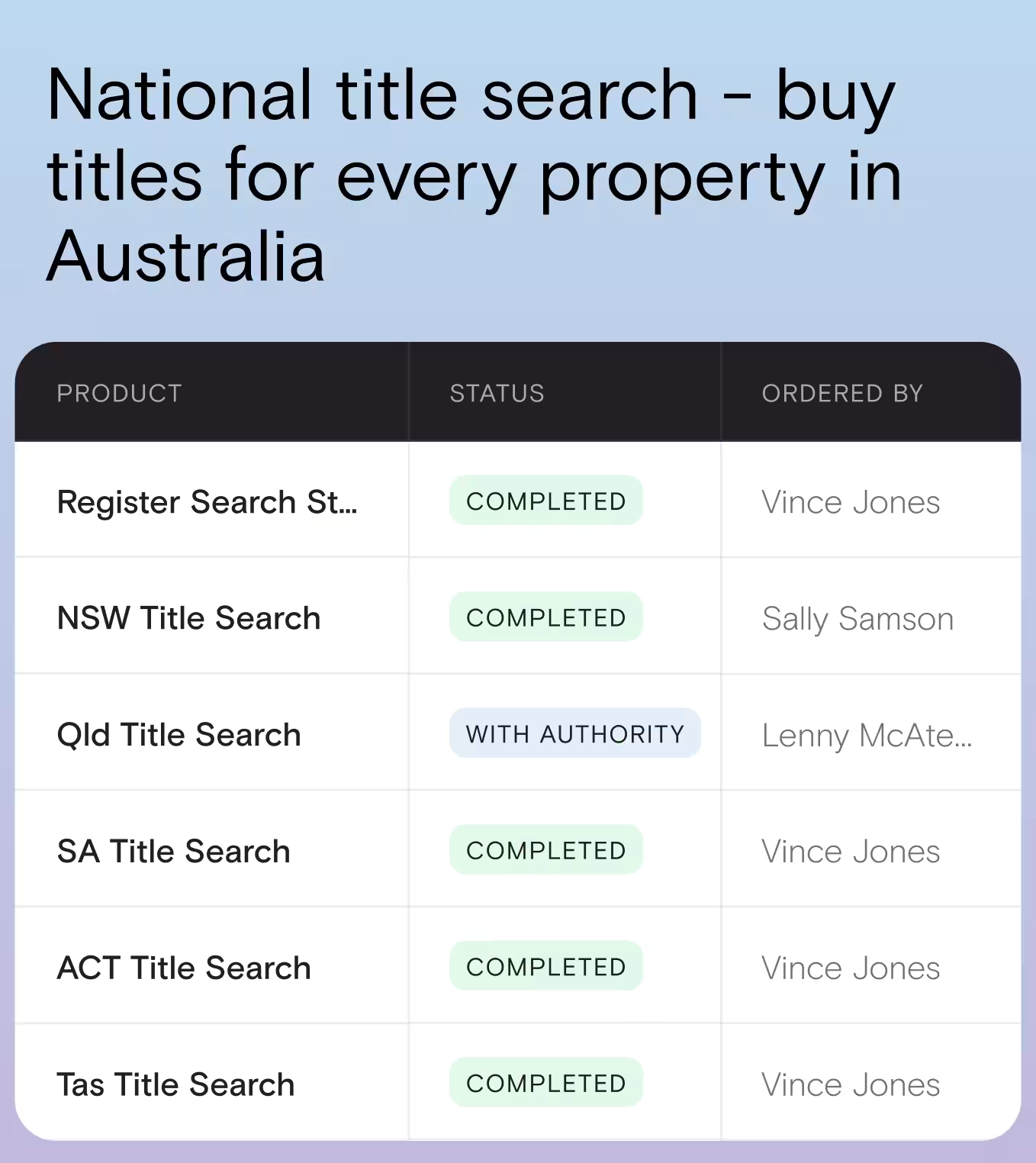

How do you access a title?
A title is a public record that is made available through state land registries in Australia. Before the digital age transformed the way we access information and documents, land titles existed only in paper form, and a title search would be conducted in person at the relevant state land registry.
Now, a title search can be conducted by anyone online, subject to a fee, through a select number of authorised providers. Landchecker is one of these providers.
What is a title search?
A title search is the examination of public records to determine the legal owner of a specific property. By conducting a title search, you’ll determine if there are existing easements, covenants, caveats, mortgages or other claims and liens that could delay or prevent the transfer of the property.
This process involves purchasing the official title from government land registries using identifiers such as a volume/folio, address or lot/plan number.
If you’re buying, selling or developing a property in Australia, conducting a title search is a key step to find out if there are any issues that could affect the decision to buy the property or the final amount to pay.
Aside from personally visiting government offices, title searches can also be done online through state land registry services or authorised brokers like Landchecker. This makes it easier and more convenient to retrieve a copy of the title for your property.
Title search vs Property title search vs Land title search
Title search, property title search and land title search are different terms used interchangeably when searching for property documents in Australia. These words mean the same thing, which is purchasing a title document for a property or land parcel.
How to do a title search in Australia
Title searches can be done through state land registries, which retain government records about ownership and other interests in the property. Title searches can be done for any property, and anyone can request a title search.
Here’s a quick guide on how to perform a title search in Australia:
Step 1: Select your provider
Choose between purchasing a property document via the state land registries or approved information brokers, such as Landchecker. Buying a title online through an information broker may require you to sign up for a free account.


Step 2: Choose a property identifier you’ll use to purchase the title
There are different property identifiers you can use to purchase a title. If your property is located in NSW, you can use the title reference.
If it’s in VIC, you have the option to use the volume/folio, crown description, SPI or council number of the property.
Step 3: Complete and submit your application
Add all the property information needed to complete your order, such as a job reference which helps you easily find the document in your order manager.
Step 4: Receive a copy of title
The title can be delivered to your inbox in just a few minutes or within 24 hours after placing your order online.
What information you get in a title search
A title search provides you with a copy of the title, which shows details about the ownership, liens, and dealings of a property. Here are more details on the information you’ll see on a title:
- Ownership details - This section lists the name(s) of the legal owner(s), it also explains the nature of the ownership, whether it’s sole ownership, joint tenants or tenancy in common.
- Legal property description - the property description includes the lot and plan numbers, land description, and dealings or instruments lodged in the property.
- Encumbrances, easements, covenants - Encumbrances tell you if there are interests in the property or land by someone other than the rightful owner. On the other hand, easements refer to the rights of other individuals or organisations to use part of the property or land parcel. Finally, covenants are agreements registered on a title that explain what can or cannot be done to the property.
- Mortgages - A title search helps confirm if there are any registered mortgages or loans secured against the property. Mortgages grant the lender legal rights, such as selling the property if the borrower fails to repay the loan under the agreed conditions.
- Restrictions - These are limitations set on a property on how it can be used or developed. Restrictions are often set by the local council or planning authorities.
- Associated dealings - The search may include recent transactions or applications affecting the title, such as transfers, leases or other lodgements. The title shows the dealing numbers, which can be used to purchase a document that shows the current status of the specific dealing.
- Any other common information - A title search may also help you view information on the survey plan, administrative notices from the land registry, and notation of any special conditions lodged in the title.


When You Might Need a Title Search
There are different situations where you may need a title search including:
1. Before buying a property
A title search helps prevent fraud before buying a property since this process helps verify the legal owner of a property. It also reveals if there are existing encumbrances, mortgages or restrictions on the property.
2. Checking who legally owns a property
Doing a title search helps you confirm who owns the property and ensures the seller has the authority to transfer the ownership of the property. This search also verifies if any related dealings and instruments could affect the sale.
3. Refinancing your property
Lenders often request a new copy of title before approving a loan. If you’re refinancing your property, it’s important to do a title search and secure an updated title and check for new liens since the last title search.
4. Preparing legal documentsHaving a good understanding of the title is crucial when preparing legal documents to avoid disputes and expensive litigation.
5. Development or planning applications
A title search is critical for property professionals who need to accurately confirm the land boundaries, easements and restrictions that may affect the development or planning phase.
6. Property due diligence
A title search is crucial when doing due diligence to help assess the value and potential risks when buying or selling a property. It also helps understand a property’s legal status to ensure the development or sale goes smoothly.
7. Checking for easements or restrictions
Checking for easements or restrictions before buying or selling a property can be done by conducting a title search. The result gives you a copy of the title, which shows if there are existing easements or restrictions against the property.
Titles by State: What you need, what you get
See below for each state:
- Name of document
- Details included on title
- Details required to conduct a title search through Landchecker (you just need one listed)
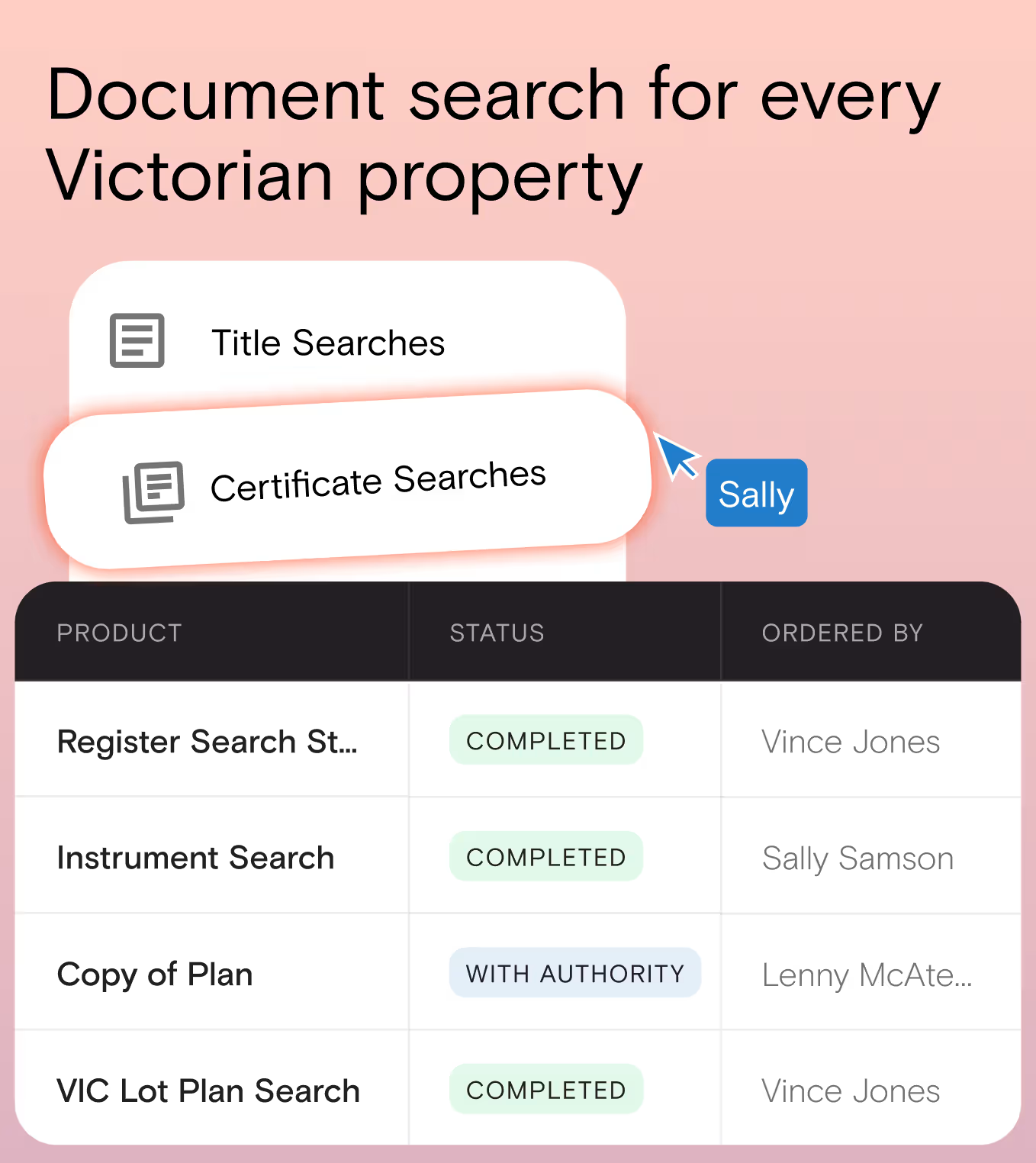
In Vic, a Register Search Statement (Title) includes:
- Land description
- Registered proprietor
- Encumbrances, caveats and notices
- Diagram location
- Activity in the last 125 days
- Administrative notices
You can search by:
- Address
- Council Number
- SPI
- Crown Description
- Lot/ Plan
- Volume/ Folio
- Individual Owners
- Company Owners
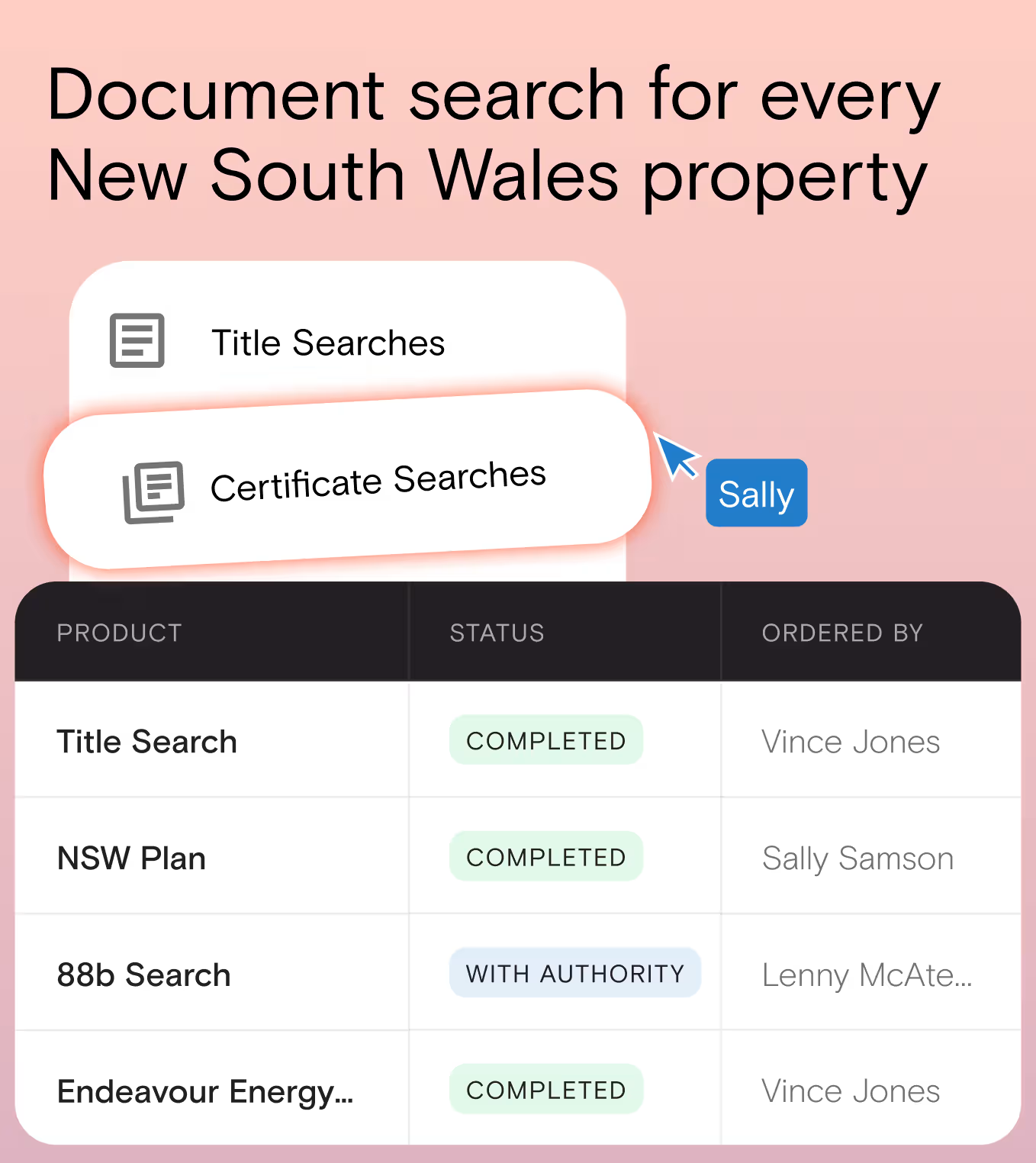
In NSW, a Title (or Certificate of Title) includes:
- Land description
- Ownership details
- Dealings
You can search by:
- Address
- Lot/Plan
- Title Reference
- Individual Owners
- Company Owners
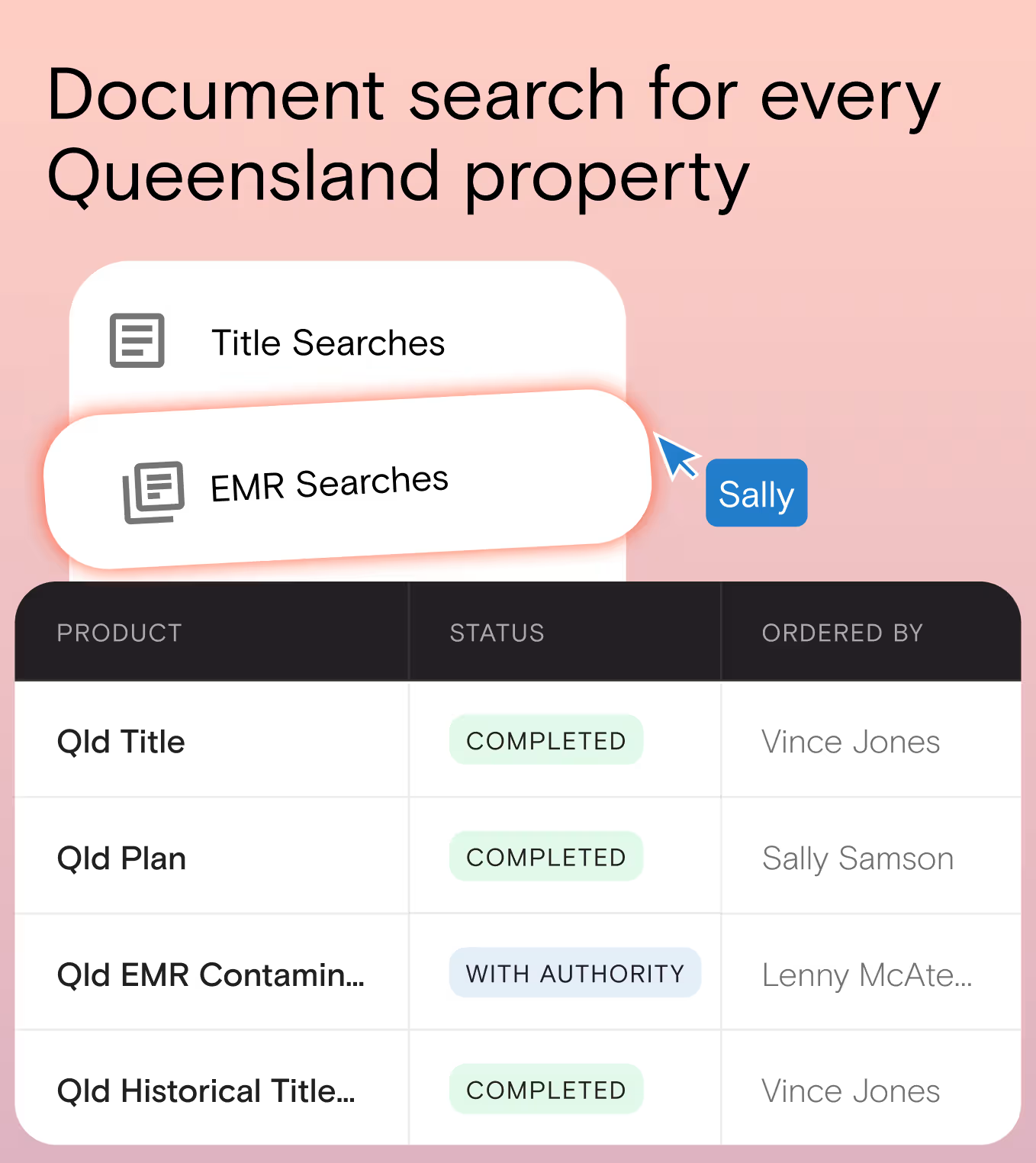
In QLD, a Title includes:
- Land description
- Type of ownership
- Registered owner details and associated dealings
- Easements, encumbrances and interests- all associated registered dealings
- Administrative advices
- Unregistered dealings
You can search by:
- Address
- Lot/Plan
In SA, a Title (or Certificate of Title) includes:
- Land description
- Type of ownership
- Registered proprietor
- Last sale details
- Easements
- Encumbrances
- Dealings
You can search by:
- Address
- Lot/Plan
- Volume/Folio
How much does it cost to purchase a title through Landchecker?
At Landchecker, we ensure our titles and documents are competitively priced - and easy to purchase - for our customers’ benefit. Prices vary slightly depending on state. See below.
Titles
- Victoria
- New South Wales
- Queensland
- South Australia
- Western Australia
- Tasmania
- Australian Capital Territory
- Northern Territory
- $28.20
- $21.36
- $38.86
- $58.66
- $47.90
- $62.95
- $56.91
- $57.05
Interested in bulk orders?
Landchecker offers competitively priced bulk title and document orders, reach out to our friendly sales team here to discuss your requirements. Simply supply a list of addresses you require titles for - job references and invoice terms are also available.
Searching and Purchasing
How do you search for a title or doc through Landchecker?
There are two ways to do this, and both are simple and seamless within the app:
You can either:
In map view, enter your address into the search bar, or click on the property on the map. Then select the ‘Documents’ tab which appears in the property information panel. And select the relevant document from the list.
Or:
Click on the Document Searches tab in the app navigation bar (next to Map tab). Select the state, then search by the dropdown criteria options for that state (eg. address or volume/folio).
How do you purchase a title or doc through Landchecker?
Once you have selected your title / doc (see above steps), simply add your selected item to your shopping cart, and go to checkout.
How quickly do you get your title or doc once purchased?
It’s made Instantly available to you, so you can download it straight away.
Other Documents
Apart from titles, what other documents can you purchase through Landchecker?
Here is a comprehensive list of all the documents you can purchase through Landchecker. Prices vary depending on state. Document names might vary depending on the state, and some documents are only applicable or available for certain states.
Property Document Searches
Instrument Search
An Instrument Search will provide an imaged copy of this search which has many types such as transfer, mortgage, agreements, caveat, covenants etc. This document is called an Instrument in Vic Or a Dealing in NSW, QLD and SA
Final Search
The final search is conducted by the purchaser’s lawyer just before the transfer of property takes place, to check that no unregistered dealings affecting the title have happened during the settlement period. Available in Vic only.
Copy of Plan
A plan is the surveyed sketch of a land lot or parcel that shows the original subdivision of this land into separate titles, as well as any easements or restrictions over the land. This document is called a Plan in NSW/QLD Or a Copy of Plan in Vic/SA.
Owners Corporation Basic Report
The owners corporation basic report outlines entitlements, rules and restrictions in relation to owners corporation and the land lot or parcel. Available in Vic only.
Land Index Search
The Land Index Search enables you to order property documents using the owner’s details, the lot/plan, and the volume/ folio.The owners corporation basic report outlines entitlements, rules and restrictions in relation to owners corporation and the land lot or parcel. Available in Vic only.
Crown Instrument
Similar to an instrument search but relating to govenment controlled land. Available in Vic only.
Crown History
Similar to a title history search statement but relating to government controlled land. Available in Vic only.
Crown Folio Statement
Similar to a title search statement but relating to government controlled land. Available in Vic only.
NSW ADIS DealingOwners Corporation Basic Report
NSW Automated Deeds Indexing System Dealing is an instrument that was lodged under the Old System. Available in NSW only.
NSW 88B
The NSW 88B is an instrument that sets out the terms of easements or covenants to be created, or restrictions on the use of land. Available in NSW only.
CRR (Central Register of Restriction)
Provides a ‘Central Register of Restrictions’ certificate that applies to a folio of the register reference and/or parish/county indicating whether a participating government authority has any interest in the subject land. Available in NSW only.
Company Searches
ASIC Certificate of Incorporation
A certificate of incorporation is a legal document issued by the Australian government which certifies a company is registered. Available nationally.
ASIC Historical Company Extract + PPSR Report
An ASIC historical company extract outlines previous addresses, directors and names of a company, while the Personal Property Securities Register (PPSR) is the official government register outlining security interests in the property. Available nationally.
ASIC Historical Company Extract
An ASIC historical company extract outlines previous addresses/directors/ names of a company. Available nationally.
ASIC Current Company Extract
An ASIC current company extract is a document containing all of the current information about a company (including shareholders and officeholders).
Available nationally.
ASIC Current Company Extract + PPSR Report
An ASIC current company extract is a document containing all of the current information about a company (including shareholders and officeholders), while the Personal Property Securities Register (PPSR) is the official government register outlining security interests in the property. Available nationally.
ASIC Relational Extract
This ASIC extract provides information on a company’s relationship with other companies. Available nationally.
Designed For Businesses
- Order any property documents relating to your subject property directly from the Landchecker map.
- Instantly receive titles by email or view documents in the Order Manager.
- Assign a Job Reference to each search for invoicing purposes.
- Assign permissions per user.
Questions?
We’re glad you asked.
Trusted by thousands of businesses every day
"Having access to all this property information in one place is invaluable, from sales data, to planning information and permits. The Landchecker map is very easy to use."
"Clients expect the advice to come immediately so they can make informed decisions on whatever it is they're doing, whether it is an acquisition or development applications or VCAT, Landchecker is that one-stop-shop; a tool that we could use to provide advice we could then give to our clients in a timely fashion."
“Landchecker is the most used and popular online tool for KordaMentha’s real estate team. Its intuitive platform simplifies complex property research, enabling our team to quickly retrieve essential information such as land size, zones and overlays, planning information, and sales history."
"Landchecker has been a gamechanger for InForm - not only in the way in which we are able to gather all accurate information on parcels of land, but also in the way in which we service our clients."
"Landchecker is essential for our business for evaluating development opportunities by offering detailed property insights, High-Resolution Imagery, and zoning data to save time and enable confident decisions."
"Landchecker has provided significant support to our due diligence process, providing efficient searching solution and quick access to key planning data and high-resolution imagery. It’s an essential tool improving the efficiency of our opportunity assessment."

.png)